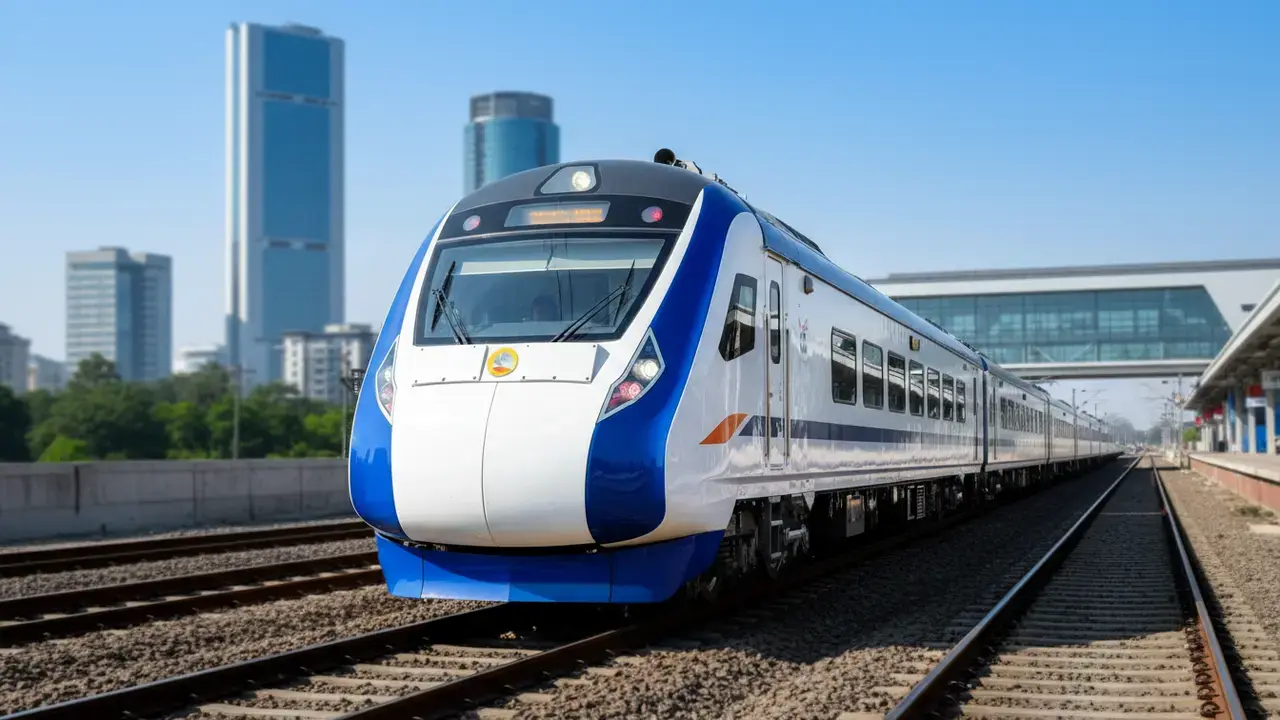
Indian Railway Finance Corporation raises ₹2,981 Cr bonds; achieves 6.79% yield, 36 bps below benchmark.

Show Table of Contents
IRFC’s ₹2,981 Crore Bond Win: A Contrarian Play for Aggressive Traders?
While most traders are chasing momentum in mid-cap PSUs, Indian Railway Finance Corporation just pulled off something remarkable. The stock closed flat on its ₹2,981 crore zero-coupon bond success story, but beneath the surface lies a potential setup that value-conscious traders shouldn’t ignore. This isn’t another routine fundraising announcement.
Here’s what separates this from the noise: IRFC secured funding at 6.79% – 36 basis points below the AAA-rated PSU benchmark. That pricing power signals institutional confidence that retail sentiment hasn’t caught up with yet. For traders willing to look past the year-to-date decline of -21.58%, this disconnect between fundamental strength and technical weakness creates a defined risk-reward opportunity.
What Actually Happened
On November 28, 2025, IRFC successfully closed its maiden zero-coupon bond issuance, raising ₹2,981 crore against a base offer of ₹1,000 crore. The issue attracted bids exceeding ₹7,500 crore, demonstrating massive institutional oversubscription of 2.5 times the base size.
The corporation accepted these bids at a competitive yield of 6.79% for 10-year zero-coupon bonds. According to The Economic Times (November 28, 2025), this yield sits well below the prevailing AAA-rated PSU benchmark of 7.15%, highlighting IRFC’s exceptional market standing and efficient capital mobilization capability.
Manoj Kumar Dubey, Chairman and Managing Director, emphasized that this issuance reinforces IRFC’s pivotal role in India’s infrastructure development. The funds are specifically earmarked for financing and refinancing critical railway infrastructure projects, including ongoing and upcoming initiatives across the railway ecosystem.




Stock Reaction and Analyst Sentiment
IRFC’s stock currently trades at ₹117.57, down a mere -0.28% on the announcement day. This muted price reaction masks a much deeper story. The stock sits 48.6% below its 52-week high of ₹166.90 and 48.7% below its all-time high of ₹229.00, indicating significant potential upside if sentiment turns.
Recent momentum remains challenging. The stock has declined -4.52% over the past month and -22.28% over the last year, substantially underperforming the Sensex’s 8.65% advance. Daily technical indicators show bearish alignment across MACD, moving averages, and Bollinger Bands, though this creates the very opportunity contrarians seek.
Analyst recommendations reveal significant divergence. Motilal Oswal (November 27, 2025) maintains a buy rating with a price target of ₹140, expecting potential upside to ₹160-165 within 9-12 months. This implies 19-40% upside from current levels. ICICI Direct and Motilal Oswal (per CIOFame, August 2025) maintain buy ratings with targets ranging from ₹175-₹185, suggesting 49-57% potential upside.
Conversely, NDTV Profit (September 11, 2025) issued a sell call, advising investors to book losses and switch to other PSUs like REC and PFC, citing expensive valuations and poor performance. This stark disagreement between analysts creates the volatility that active traders need.
What This Means For Traders Right Now
The bond issuance success fundamentally challenges the bearish narrative. When institutions are tripping over themselves to lend money to IRFC at below-market rates, they’re betting on creditworthiness that equity markets haven’t priced in yet. This divergence is your trading edge.
For momentum traders, this remains a waiting game. The weekly MACD continues signaling bearish, and the stock needs a decisive close above ₹125 with expanding volume to confirm trend reversal. Until then, chasing bounces remains dangerous.
Conservative traders should watch the ₹108.04 level – the 52-week low established on March 3, 2025. This represents critical support. A break below this level on heavy volume would invalidate the bullish thesis and suggest institutional bond confidence hasn’t translated to equity stability.
Aggressive traders have a different playbook entirely. Current levels near ₹117.57 offer an attractive entry with a tight stop-loss at ₹108. The risk-reward setup targets the first resistance zone at ₹125, with a secondary target at ₹140 (Motilal Oswal’s base case). That’s a potential 7-19% upside against a 8% downside risk.
Sentiment shift indicators will be crucial. Monitor delivery volumes on up days – any session where price rises on delivery volume exceeding 8-10 million shares would signal genuine accumulation. The recent average volume of 4-5 million shares lacks conviction from either bulls or bears.
Next catalysts matter tremendously. Watch for Q3 FY26 earnings in January 2026, specifically the performance of IRFC’s new non-railway book. The company has sanctioned ₹45,382 crore in H1 FY26 across power, renewables, and industrial infrastructure – a 9x increase year-over-year. Execution on these high-margin loans could drive the NIM expansion management is targeting above 2%.
Risk factors remain substantial and specific. Valuation concerns persist – the stock trades at 3.1 times price-to-book value with a modest ROE of 12.3%, making it expensive relative to peers. Interest rate risk on the ₹4.62 lakh crore AUM book could compress margins if rates rise further. Finally, execution risk on the diversification strategy into metros and renewables represents uncharted territory for this railway-focused lender.
The Bigger Picture
IRFC operates in a unique sweet spot within India’s infrastructure financing landscape. As a Navaratna PSU with 96% market share in railway financing, it benefits from sovereign backing that translates to zero NPAs and exceptional funding access.
The railway capex budget for FY26 is expected to hit ₹3 lakh crore, representing a 15-20% increase from last year’s record allocation. This creates a ₹25,000-30,000 crore annual financing opportunity that IRFC is positioned to capture. Fitch Ratings (May 9, 2025) affirmed a stable outlook for IRFC, highlighting the government’s strong incentive to provide extraordinary support if needed.
Competition remains limited. While REC and PFC have expanded into infrastructure lending since 2023, IRFC’s exclusive relationship with Indian Railways provides a defensive moat that other PSUs cannot replicate. The strategic shift into non-railway infrastructure aims to improve net interest margins from the current 1.55% toward the 2%+ target.
Trading Takeaway
The bond market is screaming confidence while equity markets whisper caution. For active traders, this disconnect creates opportunity. Aggressive traders can initiate positions near ₹117 with stops at ₹108, targeting ₹125 and ₹140. Conservative traders should wait for a weekly close above ₹125 with volume confirmation before committing capital.
Either way, IRFC belongs on every trader’s watchlist. The combination of institutional funding validation, government capex tailwinds, and compressed valuations rarely stays mispriced for long in India’s PSU ecosystem. The question isn’t if sentiment will shift – it’s when your entry timing will capture the move.
52 Week Range
Low: ₹108.04
High: ₹166.90
on Mar 3, 2025
on Dec 12, 2024
52 Week Low to All time High Range
Low: ₹108.04
All-time High: ₹229.00
on Mar 3, 2025
on Jul 15, 2024
Recent Returns
1 Week
-1.28%
1 Month
-4.24%
3 Months
-0.85%
6 Months
-16.22%
YTD
-21.80%
1 Year
-21.27%
News based Sentiment:
MIXED
IRFC: Record Profits & Strategic Shift in November
IRFC reported record profits and continued its strategic diversification into green energy and research, but also experienced a quarterly revenue decline and mixed analyst sentiment. The appointment of a new CMD provides leadership stability, but overall the month presents a mixed picture for investors.
Indian Railway – Peer Performance Comparison
Disclaimer: This blog has been written exclusively for educational purposes and does not constitute investment advice or personal recommendations. The author is not SEBI-registered as an investment advisor. Recipients should conduct their own research and consult a qualified, SEBI-registered investment advisor before making any investment decisions. Investments in the securities market are subject to market risks; read all related documents carefully before investing.